Common Central Heating Problems and Their Solutions, Central heating provides hot water and comfortable indoor temperatures during the cooler months in Cyprus. When a system develops a fault, the problem may affect one radiator, the hot water supply, or the entire property.
Issues involving Boiler Installation, Boiler Replacement, boiler Cyprus systems, an electric boiler Cyprus property may use, a gas boiler Cyprus heating system, a water boiler Cyprus installation, or central heating boilers Cyprus properties depend on should be assessed according to the type and condition of the system.
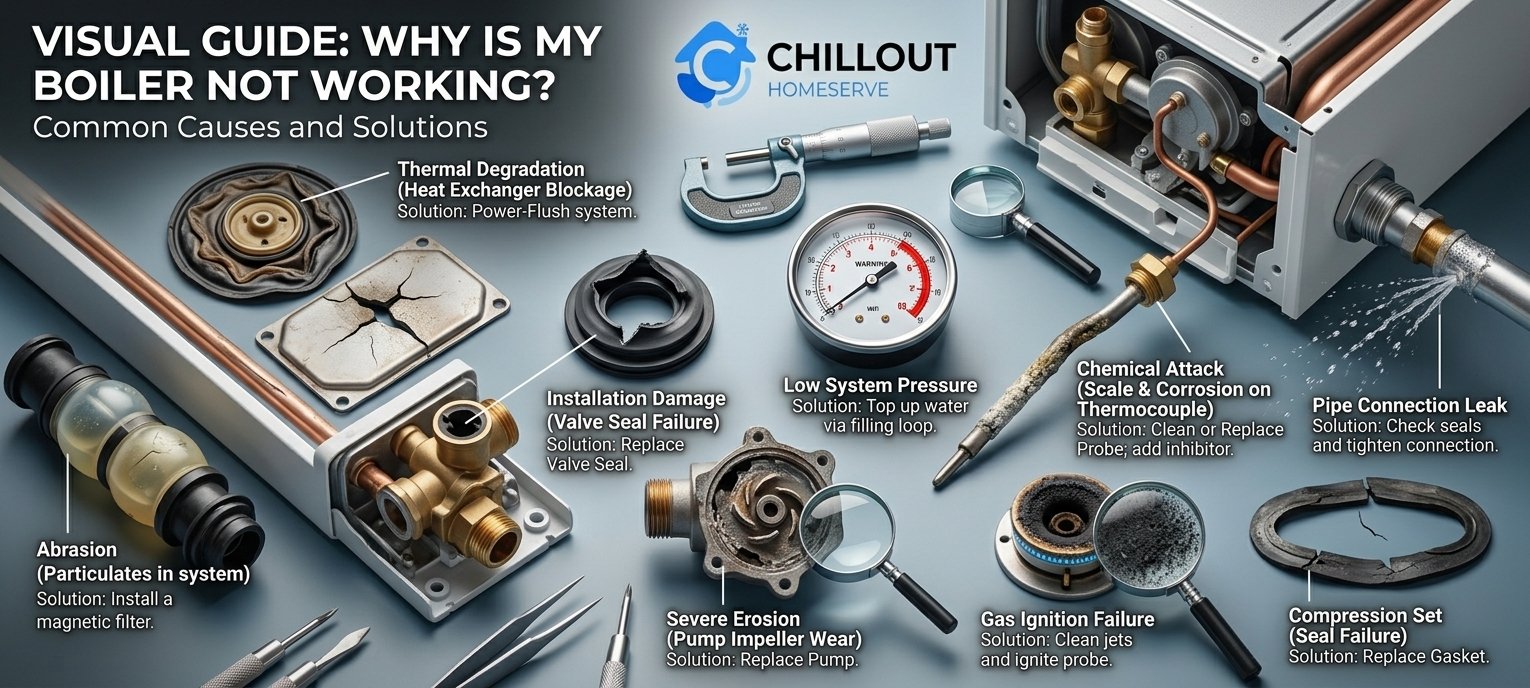
Homeowners often ask, “Why Is My Boiler Not Working? Common Causes and Solutions” when heating becomes unreliable. There is rarely one answer. Low pressure, poor circulation, thermostat problems, trapped air, leaks, pumps, valves, and ageing components can all affect heating performance.
Chillouthome Serve works with heating and property-related problems across Cyprus, helping property owners understand the source of faults before deciding what work may be appropriate.
Why People Need Help With Common Central Heating Problems and Their Solutions
Central heating systems contain several connected components. The boiler heats the water, while pumps, valves and pipework move it around the property. Thermostats and controls regulate when heating operates.
A problem with one component can therefore affect another part of the system.
For example, a radiator that remains cold does not automatically mean the boiler has failed. There may be trapped air, a valve problem, poor circulation, sludge within the system, or another issue affecting water flow.
Professional investigation helps identify the source instead of relying only on the visible symptom.
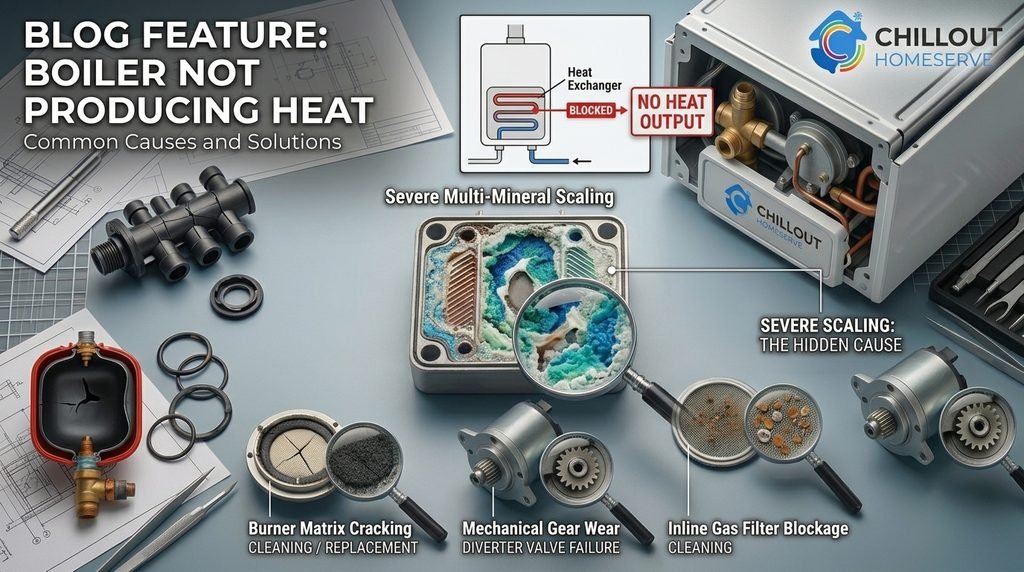
Boiler Not Producing Heat
If a boiler switches on but the property remains cold, several areas may need checking. These include boiler pressure, thermostat settings, heating controls, pumps and circulation.
The cause can vary between electric, gas and water-based heating systems, so the correct assessment depends on the installation.
Boiler Losing Pressure
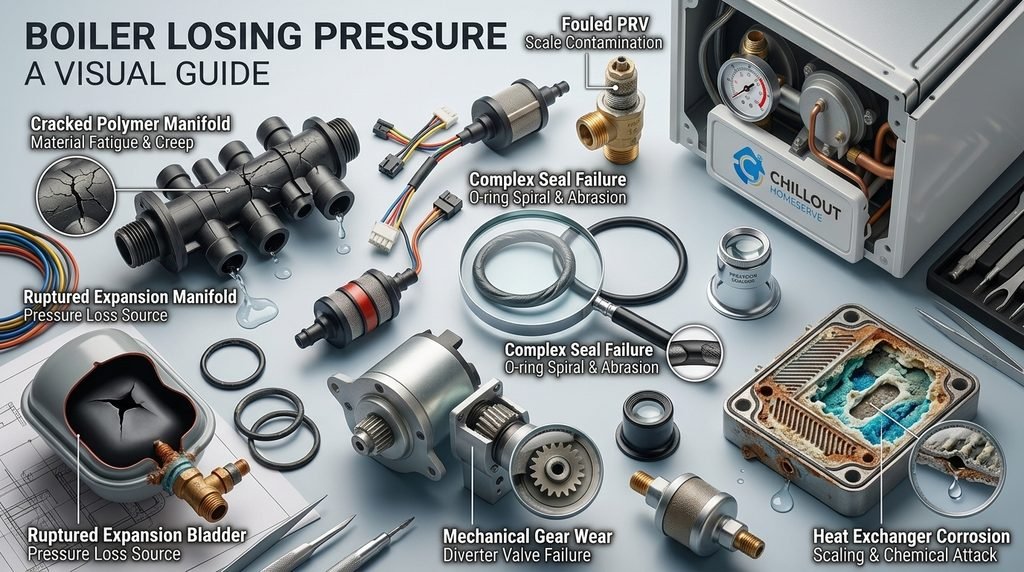
Repeated pressure loss is another common central heating concern.
A small pressure change may occur in normal use, but frequent drops should be investigated. Possible causes include leaking pipework, radiator valves, pressure-related components or faults within the boiler.
Simply restoring the pressure repeatedly does not address an underlying leak or component problem.
Radiators Are Cold or Heating Unevenly
A radiator may be completely cold or warm only in certain areas.
Air inside a radiator can affect circulation. Deposits within pipework may also restrict water movement. In other cases, valves or the circulation system may require inspection.
When several radiators are affected at the same time, the wider heating system should be considered rather than treating each radiator as an isolated problem.
Unusual Boiler or Heating Noises
Banging, rattling, whistling or gurgling sounds can occur for different reasons.
Air in the system, restricted water flow, pump problems, deposits, pressure changes and component wear are among the possible causes.
A technician can consider where the noise originates and when it occurs before recommending further action.
Heating Works but There Is No Hot Water
Some properties use the same system for central heating and domestic hot water. This means a fault can sometimes affect one function while the other continues operating.
Valves, controls, thermostats and boiler components may need to be checked when heating works normally but hot water does not.
Who May Need Central Heating Investigation?
Heating problems can occur in houses, apartments, rental properties and commercial buildings.
Homeowners may require assistance when a boiler stops working, radiators remain cold or heating performance changes unexpectedly.
Landlords may need heating faults assessed when tenants report problems with heating or hot water.
Property managers often require a clear understanding of the cause before organising maintenance work.
Commercial properties may have larger or more complex heating arrangements where circulation and control problems can affect several areas.
Insurance-related investigations may also require information about leaks, moisture, water ingress or damage associated with heating and plumbing systems.
Chillouthome Serve can also investigate related property concerns, including hidden leaks, damp problems, drainage issues, underfloor heating faults and water ingress problems.
Benefits and Important Features of Heating System Investigation
A structured investigation helps separate symptoms from their underlying causes.
For example, damp near heating pipework could result from a hidden water leak rather than condensation. Similarly, poor heating performance could relate to circulation rather than the boiler itself.
Identifying the source first can reduce unnecessary work and provides clearer information about what should happen next.
An assessment may involve checking:
- Boiler operation and pressure
- Heating controls and thermostats
- Radiators and valves
- Pumps and circulation
- Visible pipework
- Signs of water leakage
- Underfloor heating performance
- Areas affected by damp or moisture
The exact checks depend on the symptoms and the heating system installed at the property.
Boiler Installation and Boiler Replacement
There are situations where repair may remain appropriate, while other systems may require Boiler Replacement because of their age, condition or repeated faults.
A replacement decision should consider the existing boiler, heating requirements of the property, available energy source, pipework and controls.
Different Cyprus properties may use an electric boiler, gas boiler or another water-heating arrangement. Understanding the existing installation is important before changes are made.
For a new Boiler Installation, the system should be selected according to the property’s heating and hot-water requirements rather than simply replacing equipment without considering how the whole system operates.
How the Central Heating Investigation Process Works
1. Discuss the Problem
The process begins by understanding what is happening. Useful information includes when the problem started, which rooms are affected and whether heating or hot water still works.
2. Inspect the Heating System
The boiler, controls, radiators, valves and accessible pipework can then be examined.
If there are indications of moisture or water loss, further investigation may be needed to identify whether a hidden leak is involved.
3. Identify the Likely Cause
The findings help narrow down whether the problem relates to the boiler, circulation, controls, pipework or another part of the property.
4. Consider the Appropriate Response
Once the cause is understood, the next step may involve maintenance, component repair, further investigation or replacement where appropriate.

Local Experience and Area Knowledge in Cyprus
Heating requirements in Cyprus differ from those in countries with longer and colder winters. Many systems remain unused for extended periods before being required during cooler weather.
This can make seasonal checks particularly useful. Problems with pumps, controls, pressure or circulation may become noticeable when heating is switched on again after a long period.
Property construction also varies considerably across Cyprus. Apartments, older houses, modern developments, holiday properties and commercial buildings can have different heating arrangements.
Local property knowledge helps when assessing how pipework, boilers, underfloor heating and water systems interact within a building.
Service Areas Covered
Chillouthome Serve supports properties in several parts of Cyprus, including:
- Nicosia
- Larnaca
- Limassol
- Protaras
- Paralimni
- Surrounding areas
The type of heating system and property layout can differ between locations, so each problem should be considered individually.
Frequently Asked Questions
Why is my central heating not working?
Possible causes include low boiler pressure, thermostat or control faults, poor circulation, pump problems, closed valves, electrical issues or a boiler fault. An inspection can help determine the specific cause.
Why does my boiler keep losing pressure?
Repeated pressure loss may be connected to leaking pipework, radiator valves, pressure-related components or an internal boiler issue. Persistent pressure loss should be investigated rather than repeatedly topping up the system.
Why are some radiators cold while others are hot?
Uneven heating can be caused by trapped air, restricted circulation, radiator valves or deposits within the heating system. The pattern of affected radiators can provide useful information during an inspection.
When should Boiler Replacement be considered?
Replacement may be considered when a boiler is ageing, repeatedly developing faults, difficult to maintain, or no longer suitable for the property’s requirements. The condition of the whole heating system should be assessed first.
Can a hidden leak affect central heating?
Yes. A hidden leak can contribute to pressure loss and may also cause damp, staining or moisture around walls, floors and ceilings. Further leak investigation may be needed when the source is not visible.
Can underfloor heating develop circulation problems?
Yes. Underfloor heating can be affected by controls, pumps, valves, circulation problems and other system faults. Investigation helps determine which part of the system requires attention.
Conclusion
Central heating problems can have many causes, from pressure and circulation issues to thermostat faults, hidden leaks and ageing boiler components. Understanding the cause is important before deciding whether maintenance, repair or Boiler Replacement is appropriate.
For properties using central heating boilers in Cyprus, attention should also be given to the wider system, including radiators, controls, pumps and pipework.
Chillouthome Serve can assess central heating concerns as well as related hidden leaks, damp problems, drainage issues, underfloor heating faults and water ingress. If your heating or hot water is behaving differently from normal, arranging an inspection can help clarify the problem and the appropriate next step.