

Hot and Cold Water Pipe Tracing Modern commercial and residential buildings rely on a sophisticated web of mechanical and fluid networks to maintain comfort, safety, and operational efficiency. At the heart of interior climate control sits the HVAC Service infrastructure. Simultaneously, running silently behind walls and beneath concrete foundations is the complex network of supply lines carrying domestic water throughout the property.
While these systems are often managed independently, their impacts on a building’s structural health and energy profile are deeply intertwined. For property managers, landlords, and homeowners, executing a coordinated approach to building maintenance is the most effective way to prevent hidden damage, control utility expenditures, and protect structural assets over the long term.
The Strategic Importance of Routine HVAC Service
A building’s indoor environment is entirely dependent on the performance of its climate control machinery. A comprehensive HVAC service involves far more than simply replacing a clogged air filter or wiping down an exterior condenser unit. It requires a systematic technical inspection of mechanical, electrical, and chemical sub-systems to ensure the entire assembly operates exactly as engineered.
Energy Efficiency and Structural Stress
When an air conditioning or heating system lacks regular optimization, mechanical components must work significantly harder to satisfy the thermostat’s settings. Fan motors draw higher amperage, compressors run for longer cycles, and internal pressures rise. This operational strain directly translates into higher monthly energy bills and accelerates the wear on expensive components, leading to premature system failure.
Moisture Management and Air Quality
Beyond controlling temperature, a primary function of modern climate control equipment is managing indoor humidity. During cooling cycles, the system extracts moisture from the air, collecting it via a condensate pan and routing it out of the building. If a system is underperforming due to restricted airflow or low refrigerant levels, it loses its ability to regulate moisture effectively. This can lead to elevated indoor humidity, creating an ideal environment for mold spores to colonize drywall and ceiling spaces.
Uncovering Hidden Infrastructure: Hot and Cold Water Pipe Tracing
While a malfunctioning climate control system usually announces itself through rising temperatures or unusual noises, failures within the plumbing network are often entirely silent. In modern properties, water supply lines are routinely embedded directly within concrete flooring slabs or routed through structural utility chases. When a structural anomaly or pinhole leak develops, identifying the precise location of the issue without causing widespread cosmetic or structural damage requires specialized intervention.
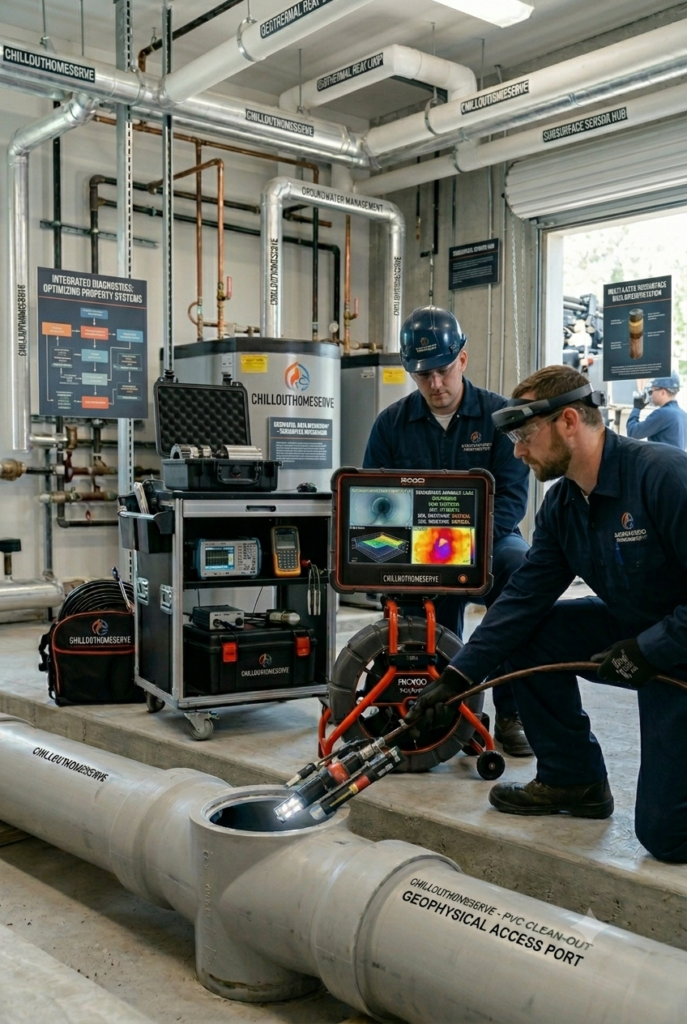
Advanced hot and cold water pipe tracing is a non-destructive investigative methodology used to map out hidden supply lines with absolute precision. Instead of using exploratory demolition to find a suspected plumbing line, technicians utilize electronic sensors and advanced diagnostic physics to locate infrastructure hidden behind solid building materials.
Mapping Thermal Signatures
For hot water supply lines and integrated underfloor heating loops, infrared thermography is highly effective. Technicians introduce regulated warm water into the network and monitor the surface with high-resolution thermal imaging cameras. The heat radiating through concrete or plasterboard creates a distinct, visible pathway on the screen, allowing the team to trace the exact trajectory of the line and pinpoint thermal anomalies where water might be escaping into the structure.
Acoustic and Gas Tracing for Cold Lines
Because cold water lines do not naturally emit a distinct thermal footprint, alternative non-invasive technologies are deployed. Acoustic data loggers can pick up the precise vibrational frequencies generated by pressurized water moving through copper or PEX tubing. In complex scenarios where ambient structural noise interferes with acoustic equipment, lines can be drained and pressurized with a safe tracer gas. Highly sensitive electronic detectors then sweep the surface to track where the gas molecules escape, revealing the exact coordinates of the pipeline.
The Convergence of Climate Control and Plumbing Diagnostics
Understanding how plumbing anomalies interact with climate control infrastructure is critical for comprehensive building maintenance. A failure in one system frequently presents symptoms that mimic an issue in the other, making combined diagnostics highly valuable.
Underfloor Heating Faults
Many modern properties utilize hydronic underfloor heating systems, which circulate heated water through specialized modern piping loops cast directly into the concrete floor. If a building experiences a drop in heating performance, the issue could stem from a mechanical fault during the standard heating system inspection or a structural physical breach within the floor loops. Executing systematic pipe tracing allows technicians to verify loop integrity and isolate the exact square meter of a subfloor fault without damaging the surrounding flooring.
Investigating Hidden Moisture Problems
Persistent structural dampness is a complex issue that can damage building envelopes and ruin indoor air quality. When damp spots manifest along baseboards or floors, it can be difficult to determine whether the source is poor humidity management from an underperforming climate control system, a slow structural leak in a domestic supply line, or a hidden drainage issue. Utilizing advanced pipe tracing alongside a thorough mechanical systems review ensures that the root cause of the moisture is correctly identified before spending money on unnecessary or incorrect remedial work.
A Structured Protocol for Building Investigations
Professional building assessments rely on strict, non-destructive sequences to diagnose property issues accurately without causing property damage:
| Diagnostic Phase | Action Taken | Primary Objective |
| Phase 1: Baseline Testing | Analyzing energy bills, checking water meters, and evaluating baseline equipment pressure. | Confirming whether a system is actively underperforming or losing fluid pressure. |
| Phase 2: Thermal Mapping | Scanning the property envelope, ceilings, and floors with infrared thermography cameras. | Visualizing thermal variations, tracking hot lines, and identifying moisture plumes. |
| Phase 3: Targeted Scanning | Deploying mechanical diagnostic tools or acoustic/gas sensors over specific areas. | Pinpointing mechanical component failures or defining the exact coordinates of hidden pipes. |
| Phase 4: Reporting & Action | Documenting findings with data logs, infrared images, and structural maps. | Providing clear evidence for surgical repairs or insurance verification. |
Long-Term Asset Protection for Property Owners
For landlords, homeowners, and commercial facility managers, moving away from reactive troubleshooting toward precision diagnostics offers distinct operational advantages:
- Minimized Operational Downtime: Surgical diagnostics mean business operations or tenancies can continue with minimal disruption while investigations occur.
- Controlled Restoration Costs: Knowing exactly where a system component or pipe is located prevents the high costs associated with wide-scale demolition and subsequent reconstruction.
- Definitive Insurance Documentation: Providing structural insurance adjusters with comprehensive diagnostic data and precise mapping accelerates claim approvals for water damage remediation.
Conclusion
Maintaining a safe, efficient, and structurally sound property requires complete certainty regarding the condition of its hidden systems. Relying on guesswork to handle climate control inconsistencies or suspected water leaks can quickly result in high utility bills and unnecessary property damage. By pairing regular, professional HVAC service with precision hot and cold water pipe tracing, property owners gain complete control over their physical assets. Taking a non-destructive, proactive approach ensures that your building’s internal climate remains perfectly regulated and its core structural foundation stays entirely secure year after year.