
Regular air compressor maintenance helps keep compressed-air equipment operating safely and consistently. In Cyprus, compressors can be found in workshops, service areas, industrial settings, and properties where compressed air is used for specific equipment. Maintenance becomes particularly important in warm conditions, where heat and long operating periods can place additional demand on mechanical components.
People searching for HVAC repair near me may also come across air compressor-related problems, especially where refrigeration, air conditioning, or other mechanical equipment uses compressor technology. Although an air compressor and an HVAC refrigeration compressor perform different functions, both depend on correct operation, suitable airflow, electrical components, and adequate heat removal.
A compressor problem can sometimes be straightforward, such as unusual noise or overheating. In other cases, the issue may be connected to electrical components, pressure, lubrication, airflow, moisture, or another part of the system.
This guide explains air compressor maintenance, common problems, how inspections are carried out, and why local conditions in Cyprus should be considered.
What Is “Air Compressor Maintenance”?
Air compressor maintenance involves inspecting, cleaning, testing, and servicing the components that allow a compressor to produce and deliver compressed air.
An air compressor takes in atmospheric air and compresses it into a smaller volume. The compressed air can then be stored in a receiver or supplied directly to equipment.
Depending on the compressor type and application, important components can include the motor, pump or compression element, air filter, pressure controls, valves, hoses, fittings, receiver tank, cooling system, and lubrication system.
Maintenance requirements vary between compressor types. A small reciprocating compressor has different requirements from a rotary screw compressor, for example.
Routine attention can help identify developing problems before they affect the wider system. It can also help maintain suitable operating conditions and reduce the likelihood of unexpected faults.
Maintenance should always follow the equipment manufacturer’s instructions and the requirements appropriate to the specific installation.
Common Air Compressor Problems
Overheating
Heat is a normal part of compressor operation, but excessive temperature can indicate a problem.
Restricted airflow, blocked filters, dirty cooling surfaces, poor ventilation, high ambient temperature, or extended operation can contribute to overheating.
Cyprus experiences long periods of warm weather, so adequate ventilation around compressor equipment is particularly important.
Unusual Noise or Vibration
Changes in sound or vibration can provide useful information about the condition of mechanical equipment.
Possible causes can include worn bearings, loose components, alignment problems, damaged mounts, or mechanical wear.
A sudden change in operating noise should not be ignored, particularly if it is accompanied by reduced performance or increased vibration.
Pressure Problems
A compressor may fail to reach its expected pressure or may take longer than usual to fill its storage receiver.
Possible causes include air leaks, restrictions, valve problems, filter blockage, pressure-control faults, or mechanical issues within the compression system.
Pressure readings can help during an inspection, but the correct operating range depends on the equipment and application.
Air Leaks
Compressed-air leaks can develop around hoses, fittings, valves, connections, and seals.
A small leak may not appear serious, but continuous air loss can cause the compressor to operate more frequently than expected.
If the compressor is cycling more often than usual, checking the connected air system for leaks can be useful.
Moisture in the System
Compressed air naturally contains moisture. When air is compressed and subsequently cools, water can condense within the system.
This can create problems if moisture is not properly managed.
Receivers, filters, dryers, drains, and pipework may all need consideration depending on the installation. Moisture can contribute to corrosion and can affect equipment that requires dry compressed air.
Why People Search for “HVAC Repair Near Me”
Air compressors and HVAC systems are not the same type of equipment, but compressors are an important part of many refrigeration and air conditioning systems.
When people search for HVAC repair near me, they may be dealing with an air conditioner that is not cooling properly, an outdoor unit making unusual sounds, or a system that repeatedly stops operating.
The refrigeration compressor is responsible for circulating refrigerant through the cooling circuit. Problems involving the compressor can affect the system’s ability to transfer heat effectively.
However, poor cooling does not automatically mean that the compressor has failed.
Other possible causes include restricted airflow, dirty filters, electrical faults, refrigerant-related problems, condenser issues, control faults, or inadequate heat rejection.
This is why proper diagnosis matters. Replacing or repairing a particular component without understanding the underlying fault can fail to address the actual problem.
Who May Need Air Compressor Maintenance?
Homeowners
Most standard homes do not have large compressed-air systems, but some properties may contain smaller compressors for specific equipment or applications.
Homeowners may also encounter compressor-related issues through air conditioning or heat pump equipment, where the refrigeration circuit contains a compressor.
Landlords
Landlords responsible for properties with air conditioning, heat pumps, workshops, or specialised equipment may need to consider the condition of compressors and associated systems.
Regular inspection can be particularly useful in properties that remain vacant for extended periods.
Property Managers
Property managers may oversee several buildings with different HVAC or mechanical installations. Keeping records of maintenance and equipment condition can help identify recurring problems.
Commercial Properties
Workshops, service facilities, industrial premises, and other commercial properties may depend heavily on compressed-air equipment.
The maintenance requirements depend on compressor size, operating hours, air quality requirements, storage capacity, and the equipment connected to the system.
Insurance-Related Investigations
Where equipment failure has contributed to water damage, overheating, or another property problem, an investigation may need to consider the compressor, associated pipework, drainage, electrical components, and surrounding building conditions.
Benefits and Important Features of Proper Maintenance
Good maintenance is mainly about keeping equipment within its intended operating conditions and identifying developing faults.
Important areas include:
- Air filter condition
- Cooling airflow
- Lubrication where applicable
- Electrical connections
- Pressure controls
- Hoses and fittings
- Receiver condition
- Drainage and moisture removal
- Unusual vibration or noise
- Signs of overheating
- Air leakage
The maintenance schedule should be based on the manufacturer’s recommendations and the actual operating environment.
A compressor working for several hours each day will generally have different maintenance requirements from equipment that operates occasionally.
The surrounding environment also matters. Dust, heat, restricted airflow, and moisture can all affect equipment condition.
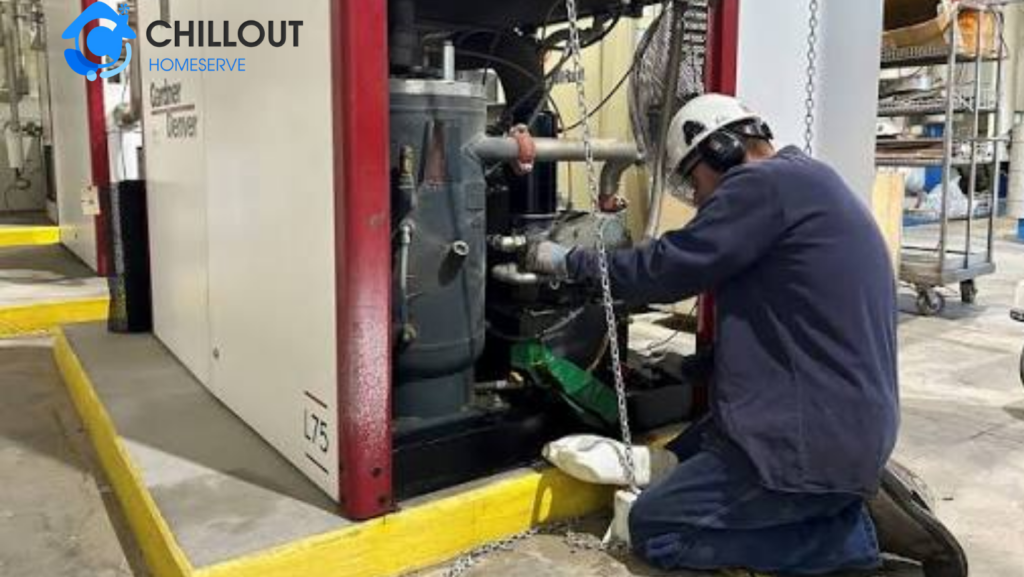
How the Air Compressor Maintenance Process Works
Initial Inspection
The process normally begins with a visual inspection.
The equipment, surrounding area, connections, hoses, filters, cooling surfaces, and accessible components can be checked for obvious signs of wear or damage.
Operating Assessment
The compressor can then be observed during operation where appropriate.
Noise, vibration, pressure development, temperature, cycling behaviour, and other operating characteristics may provide useful information.
Component Checks
Relevant components are assessed according to the compressor type.
Filters may need attention, lubrication may be checked where applicable, and connections can be examined for leaks or deterioration.
Electrical components should be inspected by a suitably qualified person where electrical work is required.
Moisture and Drainage
Where the compressed-air system includes a receiver, dryer, filters, or automatic drainage equipment, these components may also need inspection.
Managing moisture is particularly important in systems where water could affect downstream equipment.
Maintenance Records
Keeping a record of inspections and maintenance can help identify changes over time.
For equipment used regularly, records can show when filters were replaced, when inspections were completed, and whether particular faults have occurred repeatedly.
Local Experience and Area Knowledge
Cyprus has a warm Mediterranean climate, with high temperatures during much of the summer. Equipment installed in poorly ventilated locations can be exposed to considerable heat.
Compressor rooms and equipment areas should have suitable airflow and sufficient clearance around ventilation points.
Dust and airborne particles can also affect filters and cooling surfaces. Where equipment is located in workshops or other environments with increased dust, filter conditions may require closer attention.
Properties in coastal areas can have additional environmental considerations, including humidity and exposure to salty air.
These factors do not mean every compressor requires the same maintenance schedule. Instead, the installation, environment, operating hours, and manufacturer’s recommendations should all be considered.
Service Areas Covered
Air compressor, HVAC, plumbing, drainage, and moisture-related concerns can occur throughout Cyprus.
Areas include Larnaca, Nicosia, Limassol, Protaras, and Paralimni, along with surrounding communities.
In the Larnaca area, this can include Aradippou, Oroklini, Kiti, Pervolia, Lefkara, Tochni, Skarinou, Choirokoitia, and Pyrga.
Around Nicosia, properties can be found in Anageia, Deneia, Vyzakia, Fikardou, Kalopanayiotis, Kakopetria, and Pedoulas.
The wider Limassol area includes Omodos, Arsos, Apsiou, Kalo Chorio, Asomatos, Moniatis, Lofou, and Pentakomo.
Protaras and Paralimni also include areas such as Kapparis, Ayia Napa, Deryneia, and Sotira.
Frequently Asked Questions
What does air compressor maintenance include?
It can include inspecting filters, connections, cooling systems, pressure controls, lubrication where applicable, drainage components, hoses, and other parts according to the compressor manufacturer’s requirements.
How often should an air compressor be maintained?
The correct interval depends on the compressor type, operating hours, environment, and manufacturer’s maintenance schedule. Equipment used frequently may require more regular attention.
Why does an air compressor overheat?
Possible causes include restricted airflow, dirty cooling surfaces, blocked filters, high ambient temperature, poor ventilation, excessive operating demand, or a mechanical fault.
Why is my compressor losing pressure?
Air leaks, blocked filters, valve problems, pressure-control faults, pipe restrictions, or mechanical issues can contribute to pressure loss. The system should be assessed to identify the actual cause.
Why is there water in my compressed-air system?
Compressed air contains moisture. As compressed air cools, water can condense. Receivers, drains, filters, and air dryers may help manage this moisture depending on the system.
Is an air compressor the same as an HVAC compressor?
No. An air compressor produces compressed air, while an HVAC refrigeration compressor circulates refrigerant within a cooling or heat pump system. Both are compressors, but they perform different functions.
Can HVAC problems be related to compressor faults?
Yes. A refrigeration compressor is a major part of many air conditioning and heat pump systems. However, poor cooling or heating can have many other causes, so proper diagnosis is important.
Conclusion
Air compressor maintenance involves more than checking whether equipment starts and stops correctly. Filters, cooling, pressure, connections, lubrication, moisture management, and operating conditions all contribute to reliable compressor operation.
In Cyprus, warm weather, dust, humidity, coastal conditions, and long operating periods can influence equipment performance. Regular inspection should therefore take account of the actual environment and the manufacturer’s maintenance requirements.
For properties experiencing compressor problems, HVAC faults, hidden leaks, dampness, drainage issues, underfloor heating faults, or water ingress, identifying the underlying cause is an important part of deciding what attention is required.
If you are experiencing an equipment or property-related problem in Cyprus, a suitable inspection can help establish the source and clarify the next steps.