Does your radiator feel cold at the top but warm at the bottom? Can you hear gurgling or bubbling sounds when your central heating is running? These are common indications that air may be trapped inside your radiator.
Learning how to bleed a radiator in your heating system can help restore normal water circulation and improve heating performance. When air collects inside a radiator, it prevents hot water from reaching certain sections, resulting in uneven heating.
For homeowners in Cyprus, radiator problems may become noticeable when central heating systems are switched on after months of limited use.
In this guide, Chillout HomeServe explains how to identify trapped air, bleed a radiator safely, and understand when professional heating system inspection may be necessary.
What Does It Mean to Bleed a Radiator?
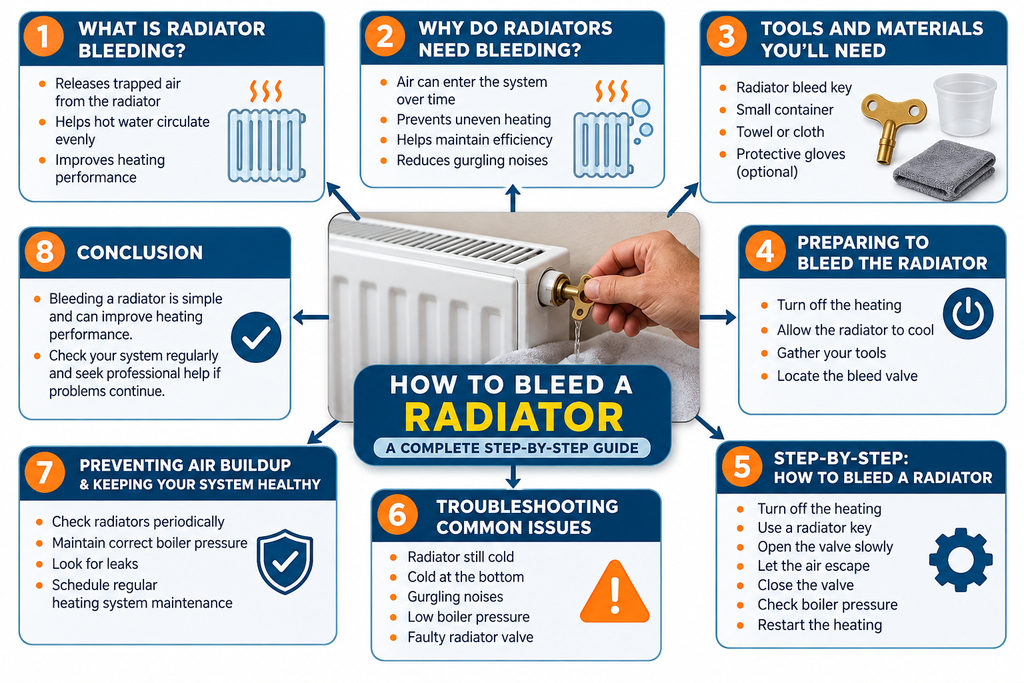
Bleeding a radiator means releasing trapped air from the radiator through a small valve, usually located near the top.
Central heating systems circulate heated water through pipes and radiators. If air enters the system, it can collect at high points and interfere with circulation.
When the air is released, water can fill the affected space, allowing the radiator to heat more evenly.
Radiator bleeding is a routine maintenance task for many wet central heating systems. However, it does not resolve every heating problem.
Signs That Your Radiator Needs Bleeding
Before attempting to bleed a radiator, check whether your heating system shows symptoms associated with trapped air.
1. Radiator Cold at the Top but Hot at the Bottom
One of the clearest indications of trapped air is a radiator that remains cold across its upper section while the lower section becomes warm.
Air tends to collect near the top of the radiator, preventing hot water from circulating through that area.
Releasing the trapped air may help restore even heating.
2. Gurgling or Bubbling Noises
Unusual water sounds inside a radiator can indicate air moving through the heating system.
These noises may become more noticeable when the circulation pump starts or the boiler begins heating.
3. Uneven Heating Between Radiators
Some radiators may heat normally while others remain partially cold.
Trapped air is one possible explanation, although balancing problems, restricted flow, or faulty valves can cause similar symptoms.
4. Radiator Takes Longer to Heat
A radiator containing trapped air may take longer to reach its normal operating temperature.
If the problem continues after bleeding, further investigation may be needed.
How to Bleed a Radiator in Your Heating System
Bleeding a radiator is generally straightforward when the system has a standard manual bleed valve.
However, it is important to follow the correct procedure to avoid hot water exposure, leaks, or pressure problems.
Step 1: Turn Off the Central Heating
Switch off your central heating system and allow the radiators to cool completely.
Do not attempt to bleed a hot radiator. Water inside the system may be hot enough to cause burns.
Turning off the circulation pump also allows trapped air to settle.
Step 2: Gather the Necessary Tools
For a standard manual radiator bleed valve, you may need:
- A radiator bleed key
- A small container
- An old towel or absorbent cloth
- Protective gloves
Some radiator valves use a screwdriver fitting rather than a radiator key.
Check the valve design before proceeding.
Step 3: Locate the Radiator Bleed Valve
The bleed valve is usually positioned near the top corner of the radiator.
It may have a small square fitting or a slotted screw.
Place a towel underneath the valve and hold a container nearby to collect escaping water.
Step 4: Open the Valve Slowly
Insert the radiator key and carefully turn the valve anticlockwise, usually by a small fraction of a turn.
You may hear a hissing sound as trapped air escapes.
Do not remove the valve completely or force it if it is stuck.
If the valve is damaged, corroded, or difficult to operate, stop and arrange an inspection.
Step 5: Wait Until Water Appears
Allow the trapped air to escape.
Once a steady flow of water begins to emerge without air sputtering, the radiator has generally released the accumulated air.
Avoid leaving the valve open longer than necessary.
Step 6: Close the Bleed Valve
Turn the radiator key clockwise until the valve is closed.
Avoid overtightening, as excessive force can damage the valve.
Wipe away any water and check that the valve is not leaking.
Step 7: Check the Boiler Pressure
Bleeding radiators can reduce pressure in a sealed central heating system.
Check the boiler pressure gauge after completing the process.
Many domestic sealed systems operate at approximately 1.0–1.5 bar when cold, but the correct pressure depends on the boiler and system design.
Follow the manufacturer’s instructions before adjusting pressure.
If the pressure is unusually low, continues falling, or you are unsure how to restore it safely, contact a qualified heating technician.
Step 8: Restart the Heating System
Once the bleed valves are closed and the system pressure is appropriate, restart the central heating.
Allow the radiators to warm up and check whether the previously cold areas now heat evenly.
If the radiator remains cold, another issue may be affecting circulation.
What Happens If You Do Not Bleed a Radiator?
Air trapped inside a heating system can affect comfort and system operation.
Uneven Room Heating
A radiator with trapped air may not distribute heat evenly, leaving some parts of the room colder than expected.
Reduced Heating Efficiency
If radiators cannot transfer heat effectively, the heating system may need to operate longer to maintain the desired room temperature.
Unusual Heating Noises
Air movement can cause bubbling, gurgling, or knocking sounds.
However, persistent knocking may also indicate other mechanical or circulation problems.
Circulation Problems
Significant air accumulation can interfere with water movement through parts of a heating circuit.
In more serious cases, professional system inspection may be necessary.
Radiator Still Cold After Bleeding? Common Causes and Solutions
If bleeding the radiator does not restore heating, trapped air may not be the main problem.
Radiator Cold at the Bottom
A radiator that is hot at the top but cold across the bottom may contain sludge or accumulated debris.
Bleeding will not remove these deposits.
A heating technician may recommend checking circulation, cleaning the radiator, or assessing whether system flushing is appropriate.
Faulty Thermostatic Radiator Valve
A thermostatic radiator valve controls hot water flow into the radiator.
If the valve is stuck or faulty, the radiator may remain cold even when the boiler is operating.
The valve should be inspected before replacing components.
Low Boiler Pressure
Low system pressure can prevent some heating systems from circulating water correctly.
If the boiler repeatedly loses pressure, possible causes include leaks, expansion vessel problems, or pressure relief valve faults.
Repeatedly topping up the system without identifying the cause is not a suitable long-term solution.
Circulation Pump Problems
A faulty or restricted circulation pump can prevent heated water from reaching radiators.
Possible symptoms include several cold radiators, unusual pump noises, and poor heating distribution.
Pump faults require professional diagnosis.
Incorrect Radiator Balancing
If radiators close to the boiler heat quickly while more distant radiators remain cool, the system may need balancing.
Balancing adjusts water distribution so radiators receive an appropriate flow.
How Often Should You Bleed Your Radiators?
There is no fixed requirement to bleed every radiator at regular intervals.
Instead, check radiators when you notice cold upper sections, gurgling sounds, or uneven heating.
In Cyprus, it can be useful to inspect the heating system before the colder months, particularly after an extended period without central heating.
Radiators that repeatedly collect air may indicate an underlying issue such as a small leak, incorrect system pressure, or a problem with system components.
Frequent bleeding should not be treated as a substitute for identifying the cause.
Radiator Bleeding and Central Heating Maintenance in Cyprus
Heating systems in Cyprus vary depending on property age, building design, and the type of heating equipment installed.
Some properties use radiator-based central heating, while others rely on heat pumps, underfloor heating, or air conditioning systems for heating.
Older radiator installations may experience issues involving corrosion, sediment, valves, and circulation.
Newer systems can also develop pressure problems or trapped air after maintenance work.
At Chillout HomeServe, central heating investigations can help identify whether a heating problem is related to trapped air, boiler operation, pipework, or other system components.
Who May Need Heating System Inspection?
Heating system troubleshooting may be relevant for homeowners, landlords, property managers, commercial properties, and insurance-related investigations involving water leaks or heating damage.
Areas Covered in Cyprus
Chillout HomeServe provides information and heating service support for properties in:
- Nicosia
- Larnaca
- Limassol
- Protaras
- Paralimni
- Surrounding areas of Cyprus
Property owners should confirm service availability when arranging an inspection.
When Should You Contact a Heating Technician?
Although basic radiator bleeding may be manageable for some homeowners, certain symptoms require professional attention.
Arrange an inspection if:
- Radiators remain cold after bleeding
- Boiler pressure repeatedly drops
- Water leaks from radiator valves or pipes
- The radiator bleed valve is damaged
- Several radiators stop heating
- The boiler displays recurring error codes
- Unusual noises continue after trapped air is released
If you suspect a gas leak or notice a carbon monoxide alarm, leave the affected area and contact the appropriate emergency service. Do not attempt to repair the boiler yourself.
Frequently Asked Questions
Do you bleed radiators with heating on or off?
Switch the heating off first and wait for the radiator to cool so you can bleed it safely.
What does bleeding a radiator do?
It releases trapped air so the radiator can heat more evenly and work more efficiently.
How long to bleed a radiator?
It usually takes a few minutes per radiator, or just until the hissing stops and water begins to flow.
Do my radiators need bleeding?
If your radiators are cold at the top, slow to heat up or making gurgling noises, then yes.
How to bleed a radiator in the UK?
The main steps are the same: switch the heating off, open the bleed valve slowly and close it once water flows.
Conclusion
Knowing how to bleed a radiator in your heating system can help resolve cold spots, trapped air, and certain uneven heating problems.
The process involves turning off the heating, allowing the radiator to cool, carefully releasing trapped air, closing the valve, and checking system pressure.
However, radiator bleeding will not correct every central heating fault. Persistent cold radiators, repeated pressure loss, and unusual noises may require further investigation.
For homeowners and property managers experiencing central heating problems in Cyprus, Chillout HomeServe can be contacted to discuss heating system inspections, radiator faults, and possible repair requirements.